Governance 101: Structures to Optimize Decision Making & Communication

Adapted from the Governance Webinar with Joyce Hrinya & Shelley Taylor
Family business governance is, at its core, about creating structures that support communication, decision-making, and clarity of roles. These structures are necessary whether a family operates a business together, manages shared assets, or is navigating the complex terrain of generational transition. Like a compass that helps orient travelers in unfamiliar terrain, governance structures provide families with the tools to have important conversations, resolve conflict productively, and move forward with intention.
Boards of directors and family councils are two primary structures for families with shared assets. Why are these structures important and what are the principles that make them effective?
Understanding Governance: The Three-Circle Model & the Hat Question
A helpful framework in family business governance is the Three-Circle Model, which maps the overlapping roles that individuals in a family business often occupy simultaneously: family member, owner, and employee or manager in the operating business. For many participants in family enterprises, these circles intersect, and they may find themselves “wearing all three hats” at any given time.
This is precisely where governance structures earn their value. The central question that governance helps answer is: what hat are you wearing right now? When a family gathers to discuss company strategy, are they doing so as owners, as managers, or as family members? The answer shapes not only who should be in the room, but what decisions they are authorized to make. Governance structures make it clear who’s in the room, who’s discussing certain topics, and whether you have a say.
Without this clarity, family members risk overstepping boundaries, creating tension across circles, or simply talking past one another because they are operating from different frames. Governance provides a safe, structured place for effective communication to happen in the right space, with the right people, wearing the right hat.
Why Governance Matters Now More Than Ever
Family business governance has always been important, but the current environment makes it essential. The pace of external change, from artificial intelligence and workforce disruptions to supply chain volatility, interest rate shifts, and demographic transformation, means that families and their businesses face pressures that require both agility and alignment.
The rapidly changing business environment makes these governance structures not merely helpful, but vital. Families need to be able to respond quickly and thoughtfully, and that requires having forums in place to discuss both the challenges they face and the values that should guide their decisions. Good governance doesn’t slow families down, it equips them to move faster with greater confidence and coherence.
Whether a family is thinking about how to use AI in their business, how to manage a labor shortage, or how to handle a rising generation eager to take on leadership, governance structures provide the conditions for those conversations to happen constructively rather than reactively.
The Internal Work: Preparing Yourself
Preparing for a conversation is not only about logistics. It also requires an honest self-check – a moment of internal reflection before stepping into any significant exchange.
This self-check has several layers. The physical: Am I hungry, tired, or physically uncomfortable in a way that might affect my patience or focus? The emotional: Am I calm, or am I carrying anxiety or frustration into this conversation that has nothing to do with the matter at hand? The conceptual: What assumptions or unsubstantiated beliefs am I bringing with me? Do I have a clear goal for this communication, or am I walking in with only a vague sense of what I hope to accomplish?
It has been said that everyone who shows up to a meeting brings several other people with them – the family members they are worried about, the unresolved issue from yesterday, the pressure from a difficult client. We cannot eliminate these competing concerns, but we can acknowledge them internally and work to set them aside. The simple act of naming what is distracting us gives those distractions less power over our behavior in the room.
These self-checks are not a one-time activity. They can and should happen throughout a conversation as well. If you notice yourself getting off-track, or if the tone of the meeting is shifting in a direction that feels unproductive, pausing for a quiet internal reset can make all the difference.
The Board of Directors: Value Creation & Oversight
A board of directors, if done as intended, is a formal structure that some family businesses are reluctant to embrace. Yet it is among the most powerful tools a family can deploy to create value for owners, maintain strategic oversight, and bring outside expertise and perspective into the business.
In addition to its fiduciary roles of financial and risk oversight, there are three important functions of an effective board. First, a board helps “operationalize the company’s purpose, vision, and values”; the direction that comes from the owners themselves. Second, it supports and provides input into strategic planning, while being careful not to cross the line into management. Third, and perhaps most distinctively, it offers expertise and an external perspective that those embedded in the day-to-day operations of the business simply cannot replicate.
This last function can be transformative. In a family business we worked with, a non-family CEO credited his board’s independent directors with helping the company recognize a key competitive shift and divest a business at exactly the right moment. Without that external vantage point, the company would have continued a path that would have significantly diminished its value. Boards that include independent directors bring what those inside the company, understandably focused on immediate operations, may not be positioned to see.
Role Clarity: Noses In, Fingers Out
A common phrase in board governance — “NIFO,” or “noses in, fingers out” — captures an important boundary that effective boards honor. Board members are there to ask questions, provide oversight, and advise. They are not there to manage daily operations, make tactical decisions, or insert themselves into the work of the management team.
For those who serve in multiple positions simultaneously, it is important to understand that company management and Board directors have different roles and decision-making authority. In another family we’ve worked with the Board chair also served as the head of a company division. He would explicitly announce when he was “taking off” one hat and putting on another. This kind of intentionality – consciously naming which role one is occupying at any given moment – helps preserve the boundaries that make governance structures function well. Without it, confusion about authority and responsibility can quietly undermine both the board’s effectiveness and management’s confidence.
Getting Started: Building a Board
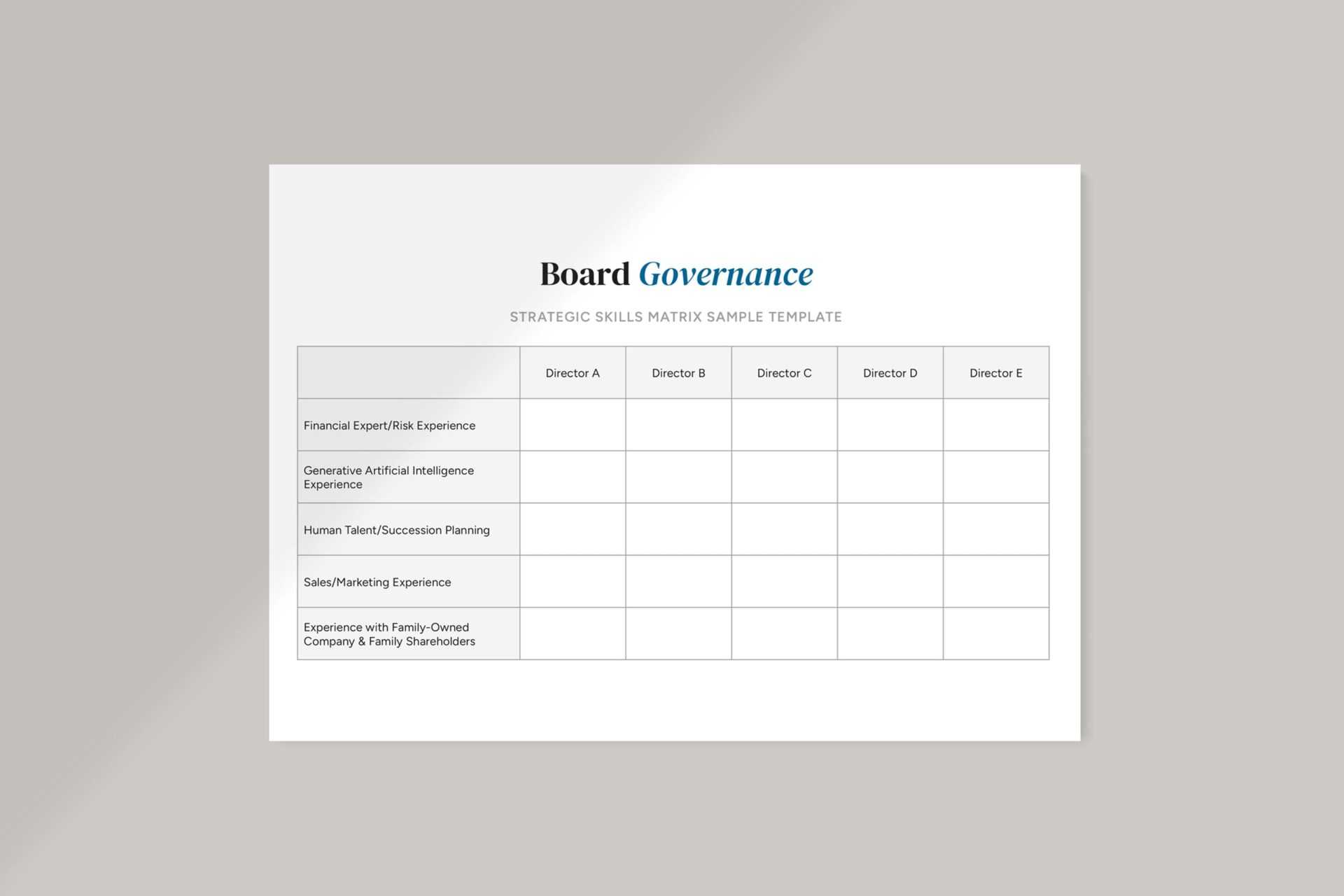
For families considering forming or formalizing a board, the starting point is identifying the skills and expertise that would add the most value. This might include finance, technology, human resources, marketing, or industry-specific knowledge. The goal is not to find people who already know your business, but to find people whose experience complements what the family and existing leadership bring to the table.
When selecting independent directors, cultural fit matters as much as expertise. It is important to choose people who can work collaboratively and respectfully within the board culture the family wants to cultivate. An independent director who is accusatory, dismissive of others, or prone to overstepping into operations can disrupt the very dynamics the board is meant to support. The interview process should explore not just what candidates know, but how they listen, how they ask questions, and how they relate to people whose context and priorities may differ from their own.
Organizations such as the Private Directors Association and the National Association of Corporate Directors (NACD) can be valuable resources for families seeking independent directors. The Private Governance Summit, a conference produced by the publishers of Family Business Magazine, is another forum where families can learn from others who have been down this road.
What the Board Discusses: Strategy, Talent & Risk
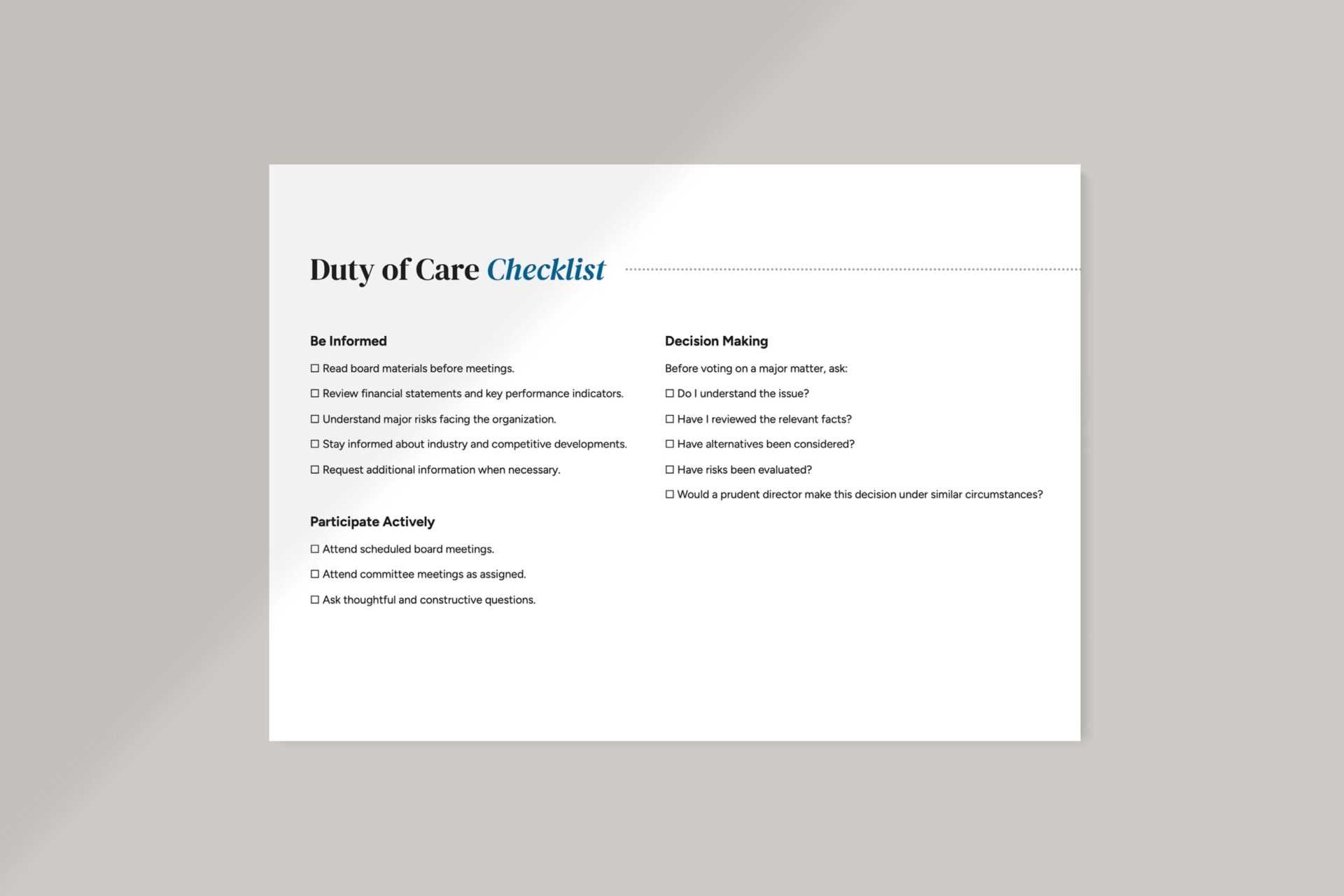
Effective board meetings are not primarily about reviewing financials line by line. They are about discussing the big questions – the ones that require diverse perspectives, strategic thinking, and robust dialogue. Three particular focus areas are strategy, talent, and risk.
Strategy conversations should address what is happening in the competitive environment, what alternatives the company has as conditions change, where the greatest growth potential lies within the family’s values and risk tolerance. And have honest conversations about what is not working, even when it is uncomfortable. “What is giving us the biggest challenges with the least returns?” can feel like a sacred cow to some family members but avoiding it does not make the challenge disappear. A board with the right culture can hold this conversation without it becoming a referendum on anyone’s judgment.
Talent and leadership succession are equally important.
Who is developing within the organization?
Who might lead the company in the next chapter?
How is compensation structured, and does it align with the family’s values?
These discussions benefit enormously from independence, from having a board member with no stake in the outcome who can ask probing questions without fear of family dynamics influencing the answer.
Risk, finally, is a board responsibility that goes well beyond financial exposure. Cyber risk, insurance coverage, regulatory compliance, and enterprise continuity are all areas where board-level oversight adds a meaningful layer of protection. Some boards run tabletop exercises (scenario simulations, like a ransomware drill ) to stress-test the organization’s readiness before a real crisis demands it.
The Family Council: A Space for the Family’s Voice
While the board of directors focuses on the intersection of ownership and business leadership, the family council is the governance structure dedicated to the family itself. It is a space where family members, whether they work in the business or sit on the board, can come together as equals to discuss shared values, family vision, relationships, education, and the family’s role as owners.
The name “family council” can take many forms. For larger families, it may be a representative body chosen from among the broader family. For smaller families, it may simply mean regular family meetings where everyone participates. What matters is not the label but the practice: creating a recurring, intentional forum where family members can engage with one another about the things that matter to the family’s shared future.
Importantly, the family council is a place where a “level playing field” can exist. Unlike the operating business, where hierarchy is necessary, or the board, where certain members carry more formal authority, the family council is a space where every member of the family has a voice. The founder or patriarch or matriarch enters not as the leader of the business but as a family member, no more or less entitled to be heard than anyone else.
What Happens in Family Council Meetings?
The activities of a family council span a wide range, and the best councils balance substance with connection. Policy conversations might cover family employment expectations, social media guidelines, or how the family communicates with the board. These policies matter, but it is the process of hearing one another’s ideas and sometimes arriving at a different view than when you walked in, the dialogue that produces them, that does the real work of building a collaborative family.
Education is another vital function. Family members who are not involved in the operating business often hunger for information about what the company is doing and how it is performing. Inviting business leaders to speak at family meetings, whether family or non-family managers, creates an opportunity for everyone to feel connected to and informed about the enterprise they are part of as owners. Learning about business and leadership more broadly is also valuable for rising generation family members and those not involved in day to day operations.
Family council meetings are a natural home for conversations about philanthropy, community engagement, family history, and legacy. And they should include time for simply being together. Activities such as family Olympics, cooking together, improv workshops, and talent shows provide time for informal, casual and fun interaction; the form matters less than the spirit. When families make time to enjoy one another’s company, the governance conversations become easier because the relationships are stronger.
Getting Started with a Family Council
For families beginning to formalize their council or meeting format, key early decisions include who participates. Will the meetings be for blood relatives only or will they include partners? At what age do younger generation members join? How often will the group meet? Where, and for how long? These logistics matter more than they might seem; if the meeting structure does not work for people’s actual lives, attendance will wane and the forum will lose momentum.
Welcoming new members into the family council deserves thoughtful attention, both rising-generation family members and partners entering the family. Some families create a formal orientation process with mentoring, ceremonies, and opportunities for new members to meet and learn from longer-tenured family members. The goal is to help newcomers feel genuinely welcomed and to set clear expectations about what participation in the family council means, so they arrive with understanding rather than uncertainty.
Families can run these meetings themselves, hire a facilitator, or do some combination of both. There is no single right answer. What matters is that the process feels owned by the family, not imposed upon it.
Connecting the Board & the Family Council
The board and the family council are distinct structures with distinct purposes, but they are not islands. Communication between them is essential. Family members who sit on the board can serve as a natural bridge, carrying the family’s values and concerns into the boardroom and reporting back what the board is focused on. Beyond that, families can create forums where family members can meet and hear from independent directors, deepening mutual understanding and trust.
The family council is a valuable incubator for the next generation of board members. Conversations about what qualifications matter for board service, how family members should be prepared, and what the selection process should look like are well-suited to the family council. Not because the family council makes the selection, but because it creates the shared understanding that makes the selection process legitimate and trusted.
Building the Foundation for the Long Term
Family business governance is not a destination, it is an ongoing practice. Boards evolve as the company’s needs change. Family councils grow and adapt as new generations come of age and families expand. What matters most is not getting everything right from the start, but beginning: creating the structures, developing the culture, and committing to the conversations that allow a family to work together with clarity, respect, and shared purpose.
Families who invest in these structures understand that the best time to build the infrastructure is now, before you need it urgently, not after. The governance structures that seem unnecessary in good times are precisely the ones that hold a family together when the road gets harder.
Whether your family is just beginning to think about governance, working through a generational transition, or looking to formalize structures that have been informal for years, the path forward is the same: start with the conversations that matter, create the structures that support them, and commit as a family to the ongoing work of building something worth passing on.