Mentorship

Identifying mentors, and fostering meaningful relationships facilitate knowledge transfer and skill development.

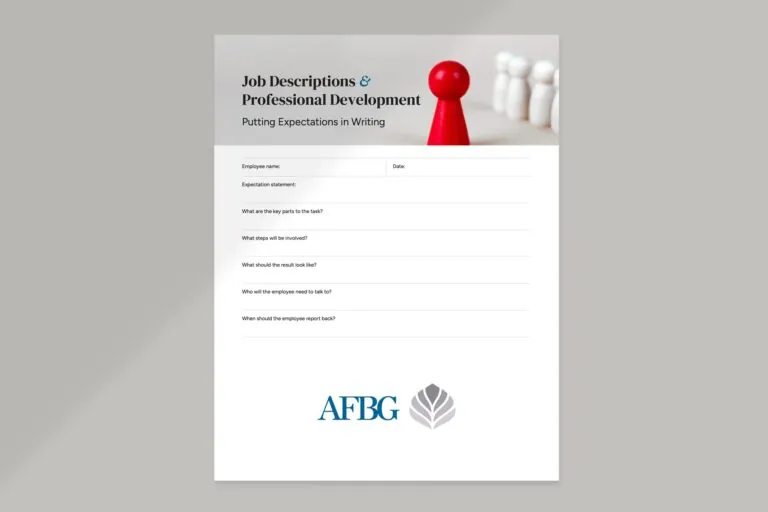
  • Job Descriptions & Professional Development: Putting Expectations in Writing

    There are many expectations that go along with a role, whether one is preparing for a new role, or developing in their current role. This “expectations” tool can be used multiple times for different expectations in the same role. Expectations are filled out collaboratively with the employee and the mentor or appropriate leader within the organization.

  • Job Task Analysis

    Job Task Analysis helps family and non-family leaders define role purpose, responsibilities, decision rights, set performance measures, and establish work rhythms, helping to build clarity and cohesion across the organization.

  • Career Planning

    The Career Planning Tool helps to identify strengths, developmental needs, and career aspirations to help build a growth approach to employee development.

  • Individual Development Plan

    Employees and supervisors can use this model to define goals, identify on-the-job actions and training, set timelines, and establish clear measures of success.

  • Onboarding Plan For a Family Member Joining The Business

    This framework is an orientation and onboarding example for a family member joining the family enterprise. Both the new hire and the senior leader have important tasks and expectations. Regular meetings are an integral component of the plan.

  • Mentor Self-Assessment & Mentee Assessment

    Regular assessments provide feedback to program administrators, as well as to the participants. Responses can signal if the program needs to be modified or if a change in mentor is needed.

  • Network Mapping

    In a family business, the number of potential mentors can be limited. Using the network approach to finding mentors in family business expands the pool of potential mentors.